ハニヤスの家 - 大地と土へのオブセッション
「ハニヤスの家は、陶芸家である両親と建築家である私たち夫婦のための二世帯住宅である。
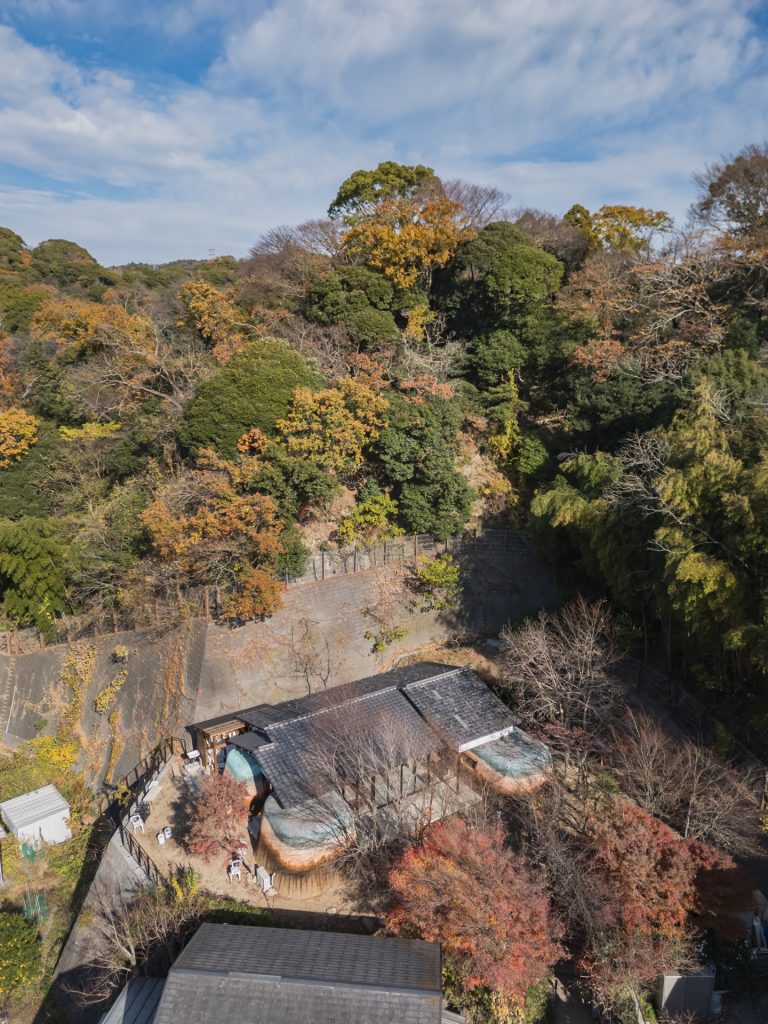
陶芸家である両親は、15年ほど前に、土と向き合い制作に没頭できる環境を求めて鎌倉に移り住んできた。家は鎌倉の谷戸の際に位置し、崖に囲まれ、近辺には横穴式の「やぐら」が点在するような、大地の存在を強く感じる環境にあった。そこで、この土地に対峙し呼応するために、人類にとって最古の素材である「土」を主題とし、自らの手で建築を生み出していった。
Haniyasu House is a two-family residence designed for our parents, who are ceramic artists, and for ourselves as architects.
About fifteen years ago, our parents moved to Kamakura in search of an environment where they could fully devote themselves to working with clay. The house is located at the edge of a valley called yato, surrounded by steep cliffs into which horizontal cave tombs known as yagura are carved—an environment where the presence of the earth is strongly felt. In order to confront and respond to the way this land exists, we took “earth,” humanity’s most ancient material, as our central theme and brought the architecture into being.
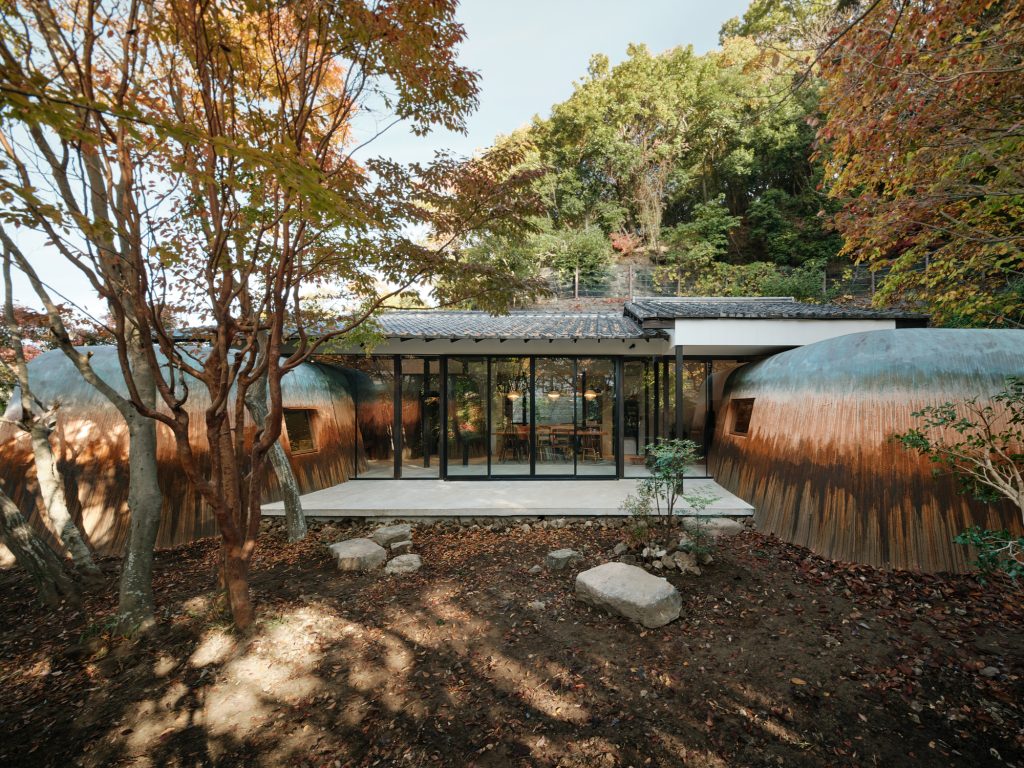
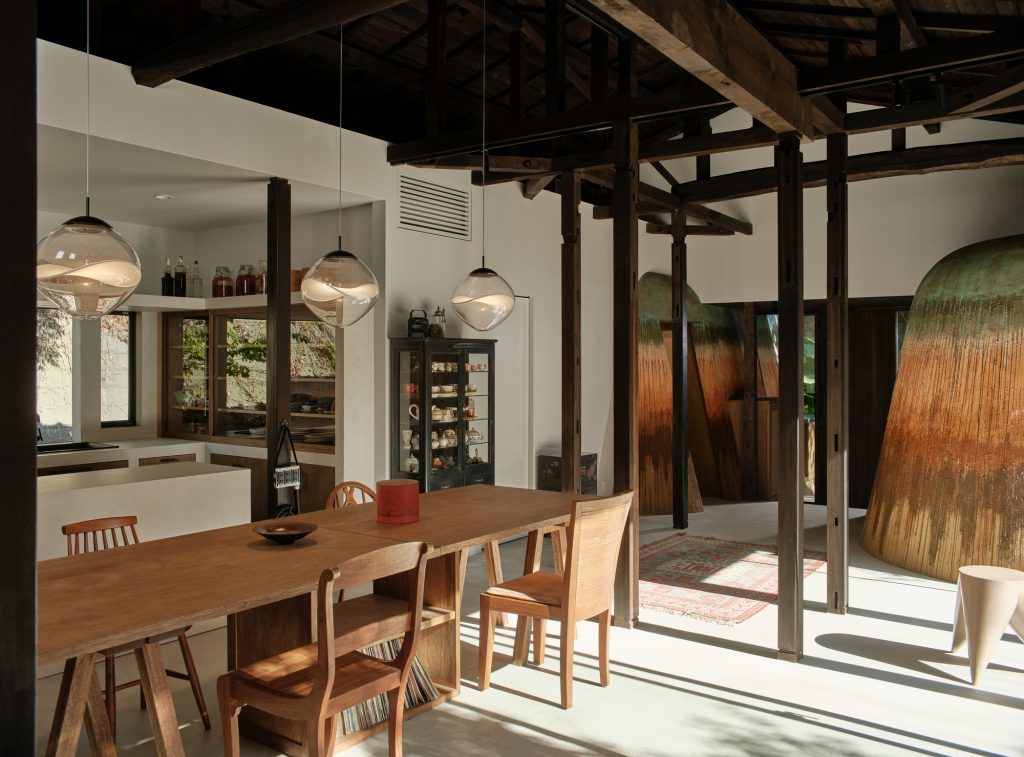
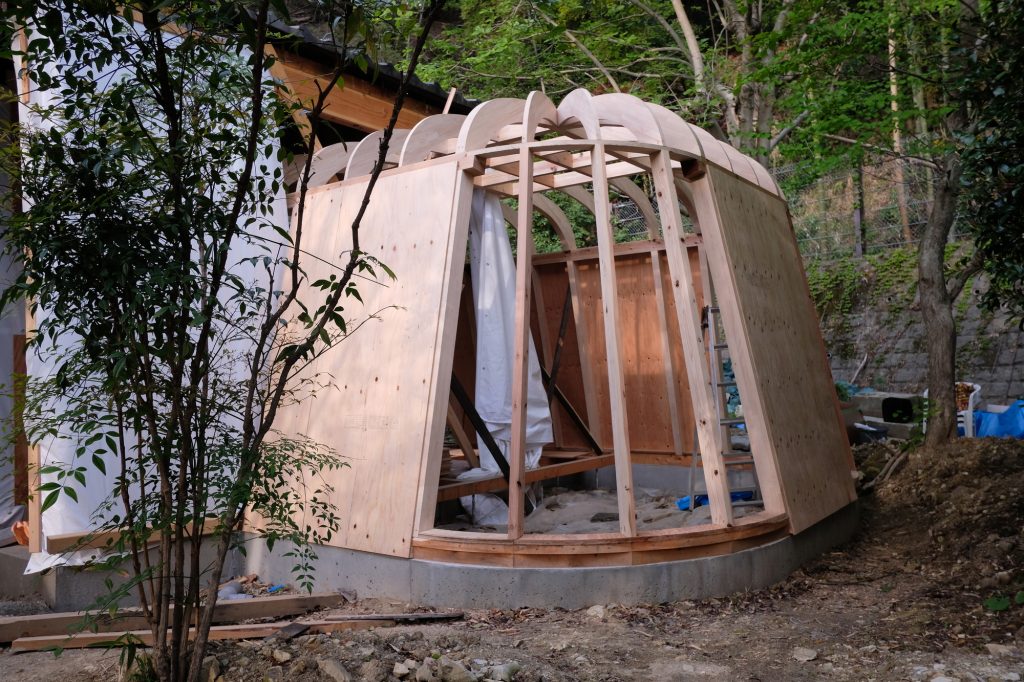
全員が創作に関わる私たちに相応しい場として構想したのは、生活と創作が未分化であった頃の、原初的な住居の姿である。既存の母屋の壁と天井を取り払い、周囲と繋がる大きなひとつの空間とし、その四隅に、地面から土の塊が隆起したような部屋を増築することにした。
As a place suited to all of us, whose lives revolve around making, we envisioned a primordial dwelling—one from a time when living and creating were not yet separated. We stripped away the walls and ceiling of the existing house to form a single large space connected to its surroundings, and added new rooms at its four corners, their forms evoking masses of earth emerging from the ground.
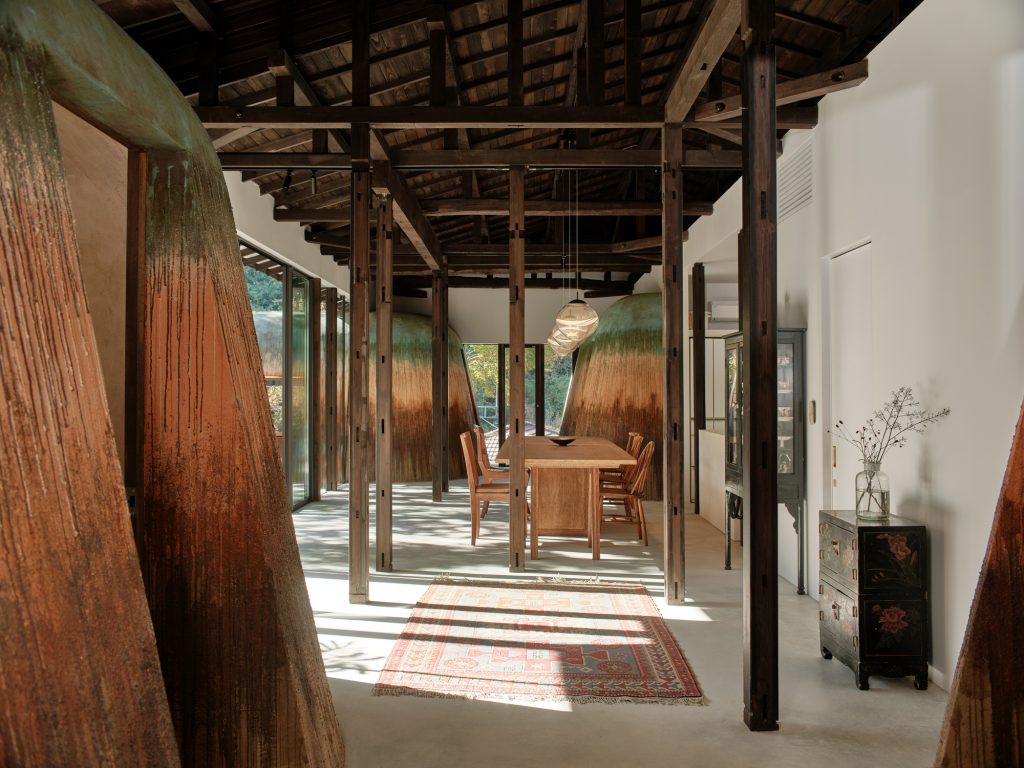
増築部分は、鎌倉に点在する横穴式の「やぐら」や陶芸の窯になぞらえ、「土のかまくら」と名付けた。それぞれが洞窟のように閉じた空間で創作と寝起きをし、中央の広場のような母屋に集って語らい、食事を共にする、集落のような暮らしを思い描いた。
「ハニヤスの家」という名は、日本神話に登場する、土や大地、陶芸を司る神の名に由来し、ハニは古語で粘土を意味する。その神に捧げるように、土を媒介として大地と一体となりながらも、大地や建築、陶芸という枠組みを超越し、生活と創作が地続きとなる人間の根源的な営みを受け入れる器となることを目指した。
The extensions were named “Earthen Kamakura.” Each person works and sleeps in a cave-like enclosed space, while gathering in the central, plaza-like central space to converse and share meals. We imagined a way of life akin to a small settlement.
The name Haniyasu House derives from a deity in Japanese mythology who governs earth, soil, and pottery; hani is an archaic Japanese word meaning clay. As if offered to this deity, the house seeks to unite with the land through earth as a medium, while transcending the frameworks of land, architecture, and pottery—becoming a vessel in which living and creating can remain inseparable.
私たちは建築だけでなく、照明や家具などジャンルを超えて活動しており、この家にもそれらが置かれ実際に使われているが、その制作の過程でも素材実験を行うことから考えることが多い。今回も、この家の土地や、父の身近にある素材に直接触れながら建築の立ち現れ方を考えた。
Our practice extends beyond architecture, spanning multiple disciplines, including lighting and furniture, all of which are used in this house. In the process of making them, material experimentation often becomes the starting point.
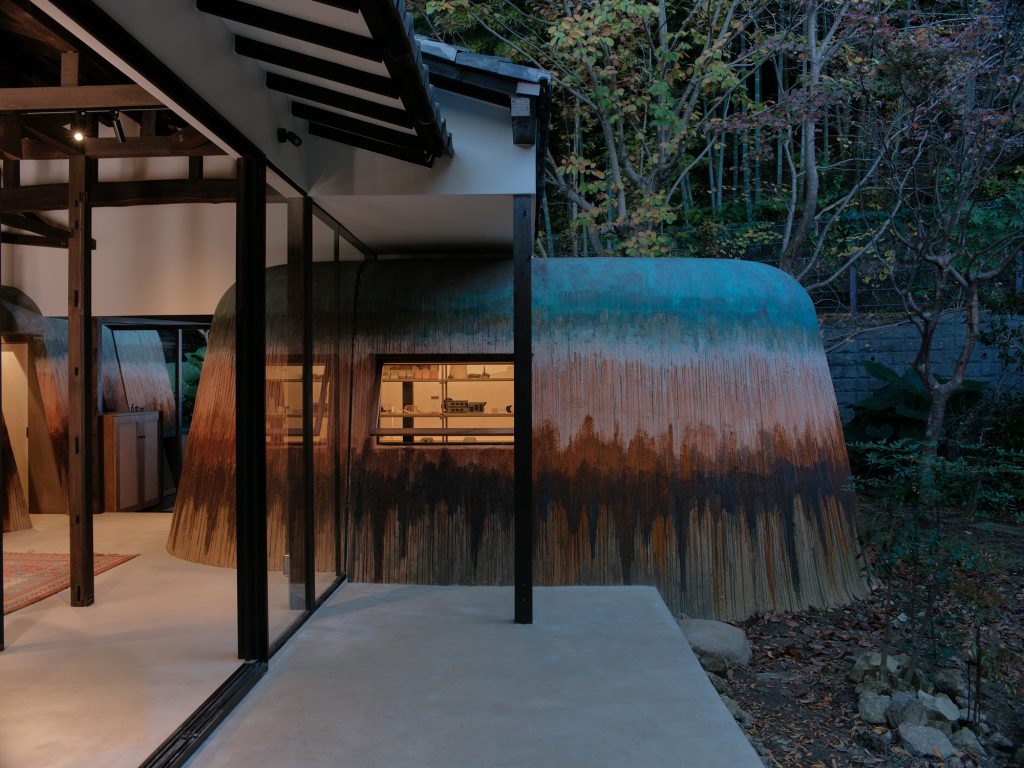
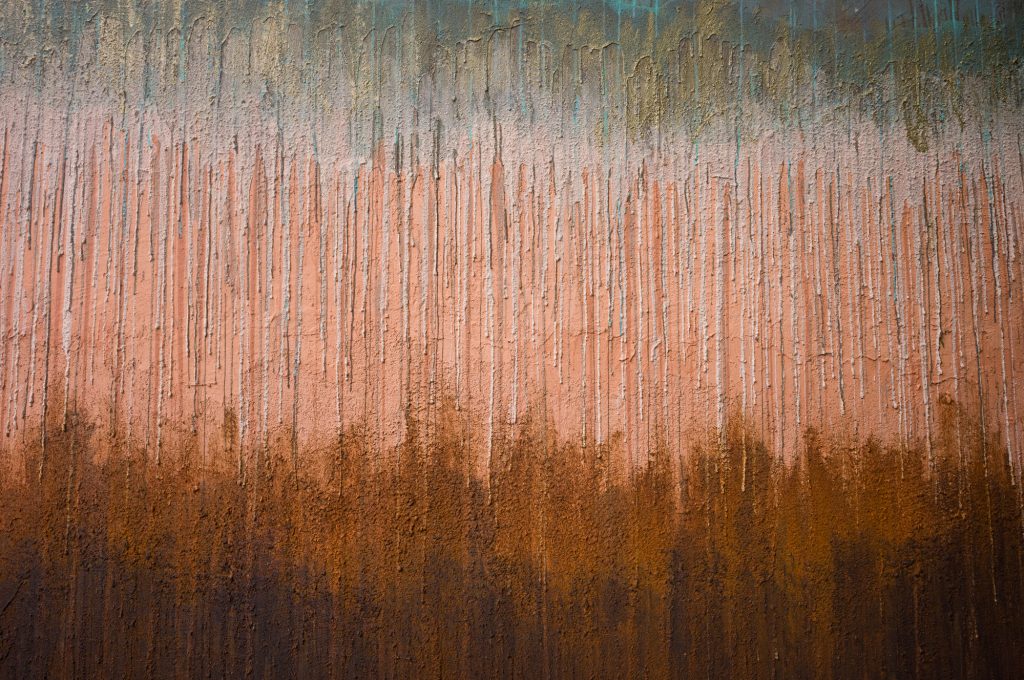
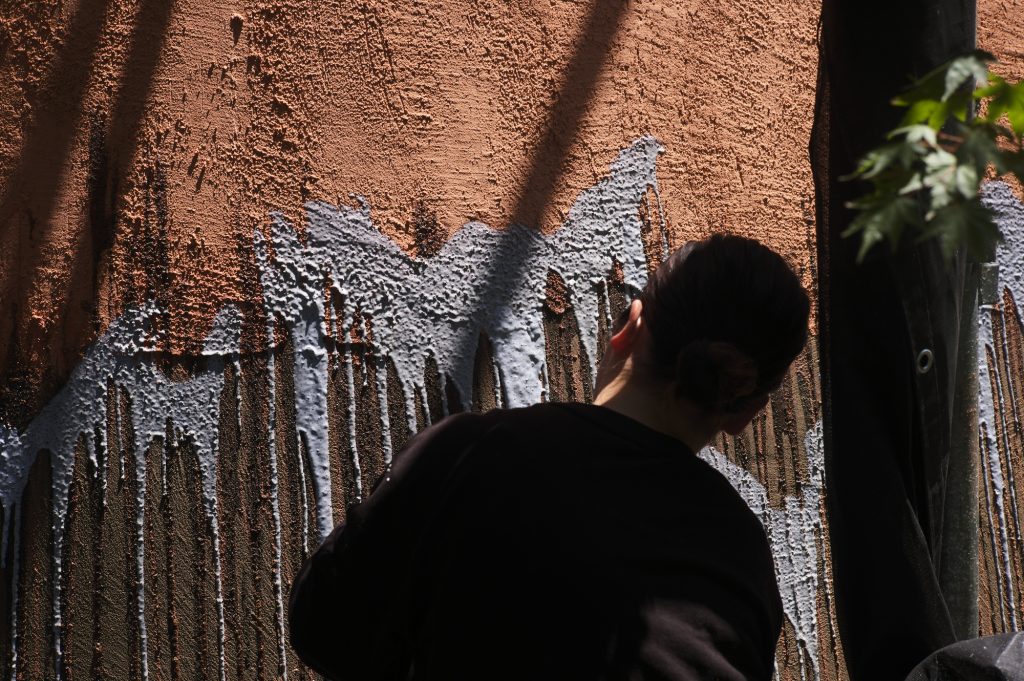
土地の粘土質の塊を砕き、父の窯で焼成したり、釉薬を施してバーナーで炙ったりとさまざまな実験を繰り返し、大地の色そのものを素材にすることを試みた。最終的には、土地の土に加え、父の制作過程で生じた屑土を素焼きし、大地の色の上に重ね、さらに、加工場で出た鉄や銅の金属粉を混ぜた左官材を「土のかまくら」の外壁に釉薬のように幾層にも流し掛け、錆によって発色させた。
偶然性や時間の痕跡を宿し、陶芸や工芸品のような複雑さや素朴さを持つこの建築は、異様な存在感を放ちつつも、大地から空へと溶け込み、今後も風雨や時間の経過を受け入れながら変化し続けていくだろう。
In this project as well, we considered how the architecture might emerge by directly engaging with the soil of the site and materials close at hand in my father’s ceramic practice. We crushed clay-rich soil from the land, fired it in my father’s kiln, applied glazes, and scorched it with burners—repeating numerous experiments in an attempt to use the colors of the earth itself as a material.
In the final process, we bisque-fired discarded clay generated through my father’s making process, layered it over the soil from the site, and then poured a plaster mixed with iron and copper powder—byproducts from a metal workshop—over the exterior walls of the extensions in multiple layers, like glaze, allowing oxidation to produce color through rust.
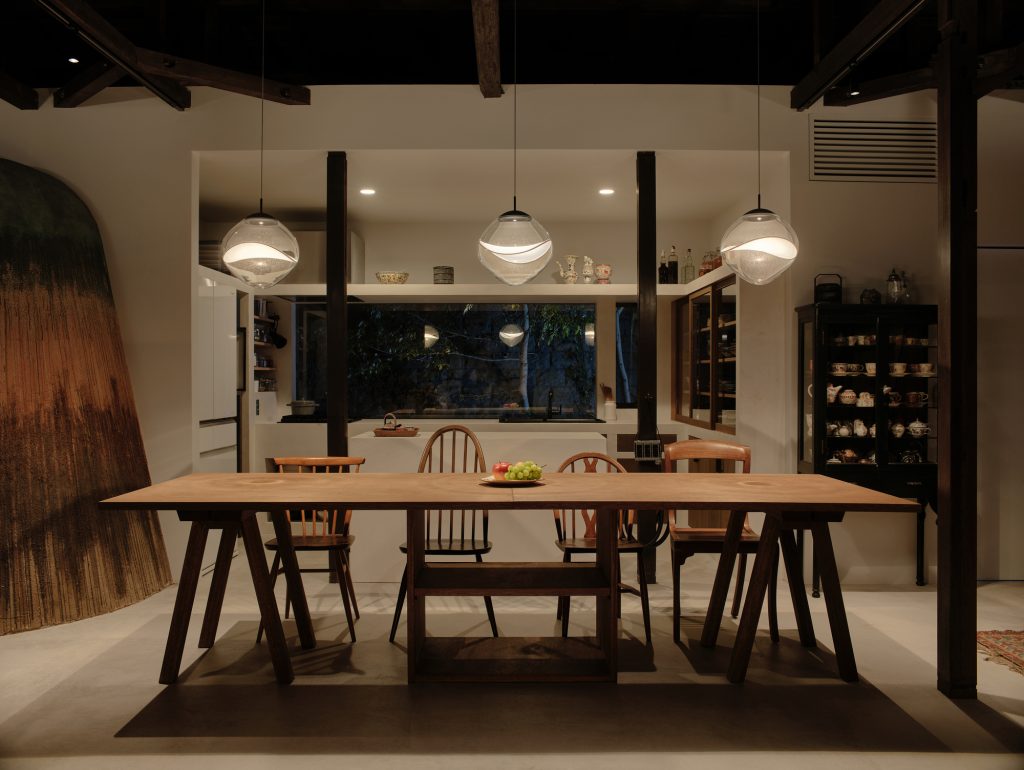
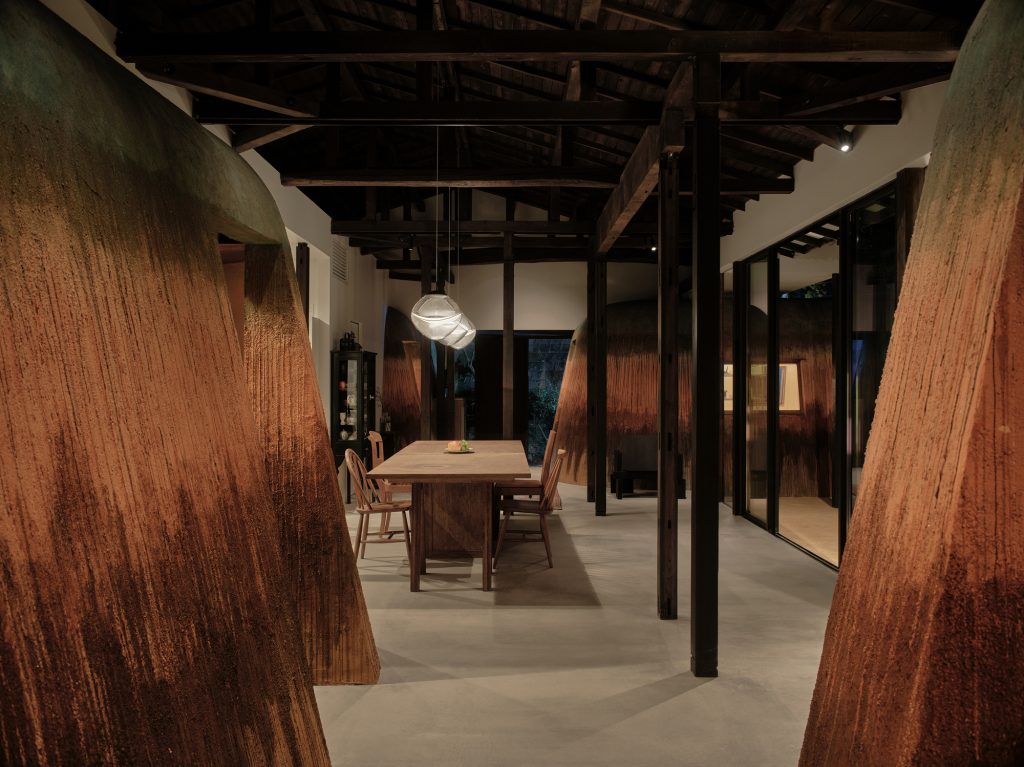
文化や歴史を横断した根源的な人の生活や創作のあり方を見つめること、そして素材や身体性に立ち返り土地が内包する物質性や時間に向き合うこと。その往復のなかで、建築は単なる機能や形式を超え、大地と人間の関係を練り直した器としての力強さを獲得する。「ハニヤスの家」は、建築が再び「物質的な力強さ」と、「つくることと生きることの調和」を取り戻すための試みである。
By looking across cultures and histories at fundamental ways of living and making, and by returning to materiality and bodily experience to confront the substance and time embedded in the land, architecture can transcend mere function and form. Through this oscillation, it gains strength as a vessel that reconfigures the relationship between humans and the land. Haniyasu House is an attempt to restore architecture’s “material force” and the harmony between making and living.
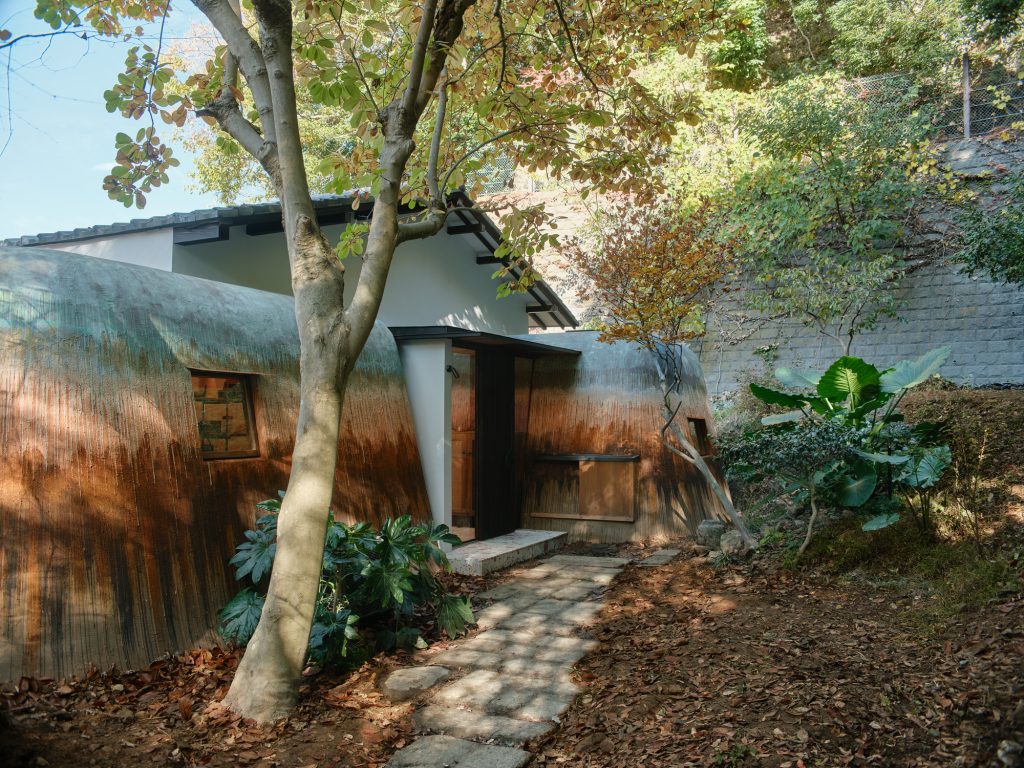
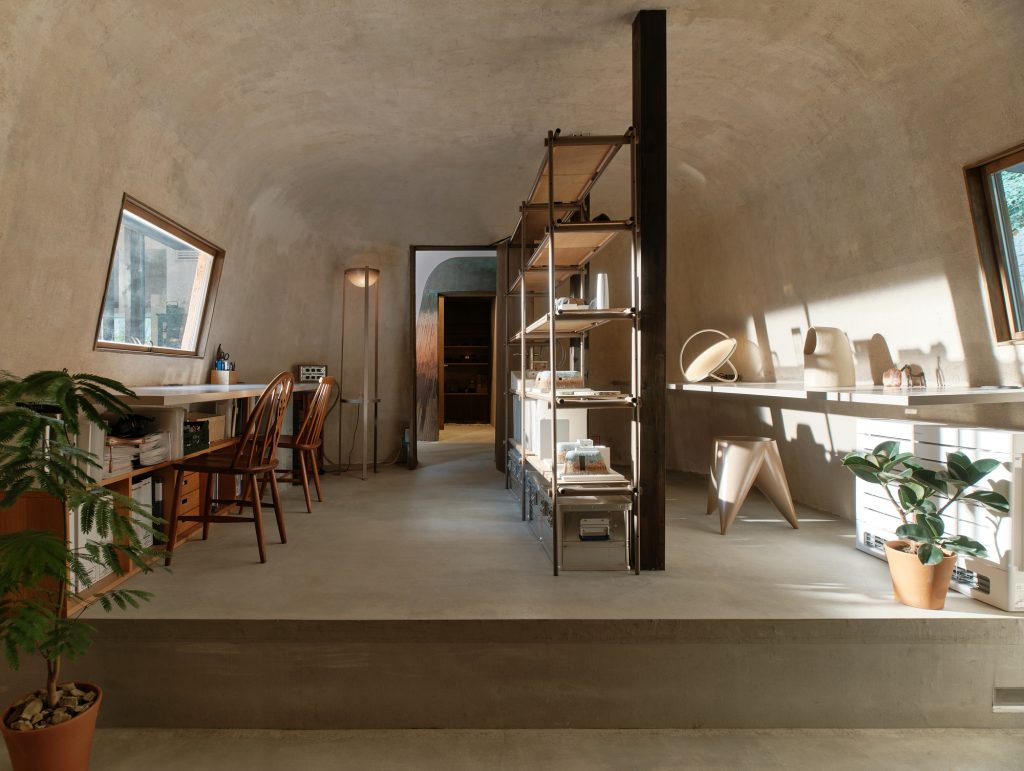
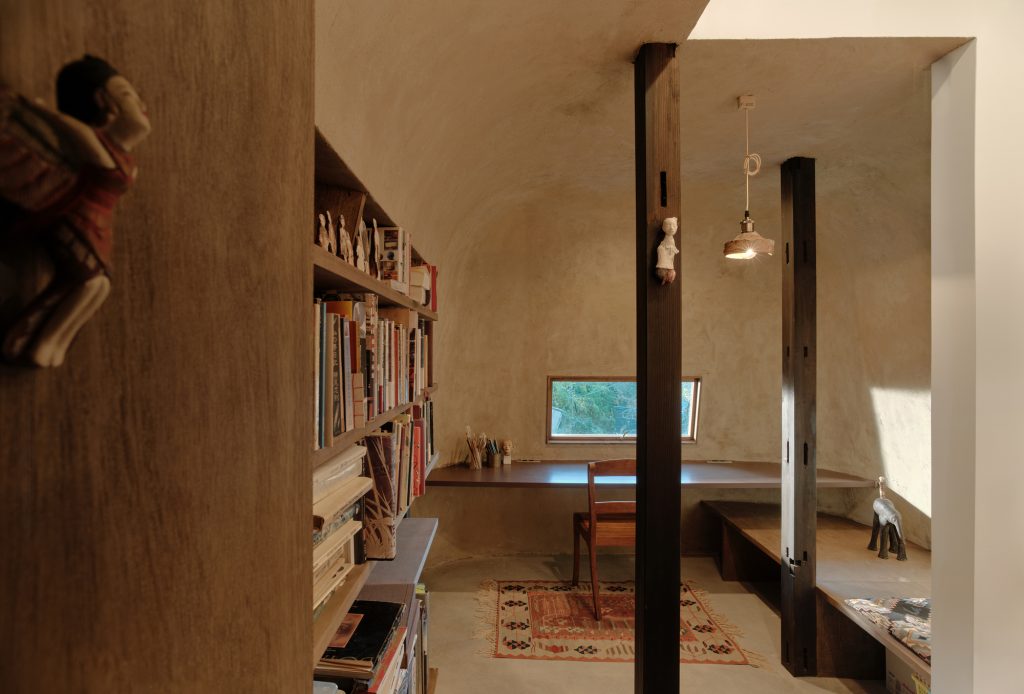
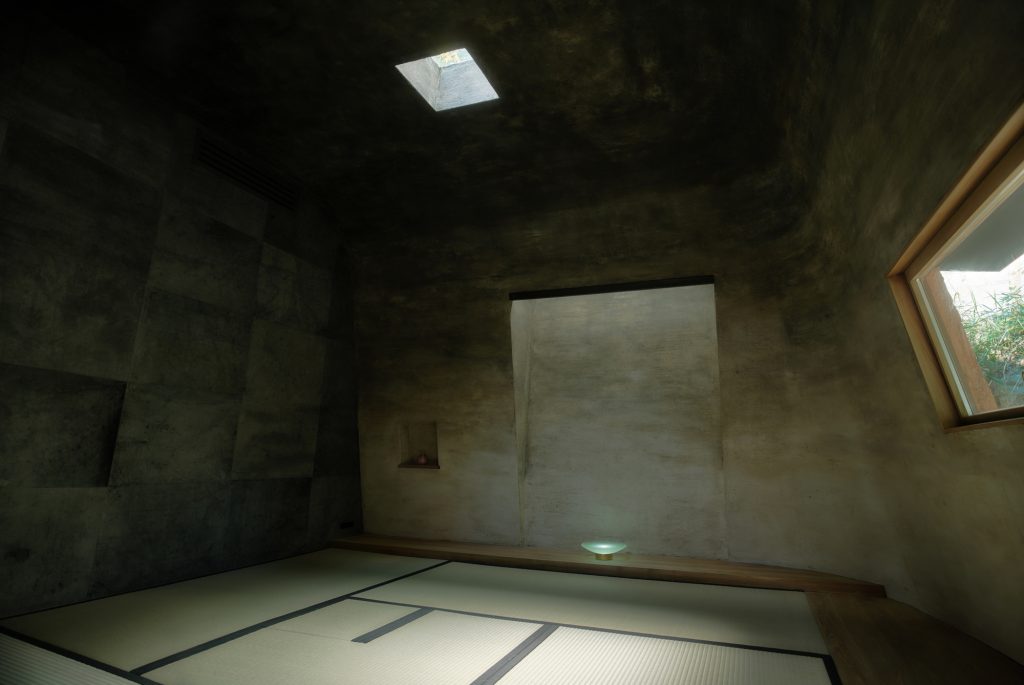
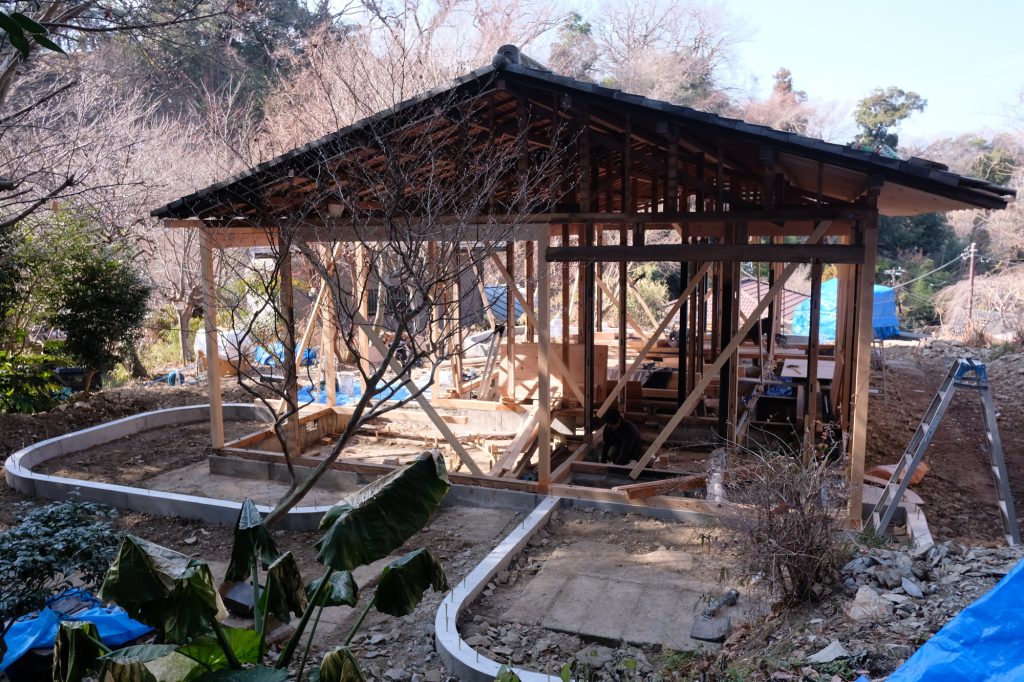
母屋は昭和42年に建てられた木造平屋であり、崖に囲まれた土砂災害警戒区域に建つ。数年前の台風では敷地に至る道で土砂崩れが起き、通行やインフラが止まったことがあった。また、母屋の一部も特別警戒区域内に入っていたため、その部分は減築し崖から離隔を取りながら、四隅に増築することで構造的な補強を行った。
壁や天井は取り払い、腐朽した土台などは交換しつつ、柱は基本的にそのまま残し瓦屋根の鉛直荷重を受ける。一方、既存の基礎は無筋のろうそく基礎であったため、耐力壁はすべて四隅の増築部にバランスよく配置した。
The original house is a single-story wooden structure built in 1967, located within a landslide-prone area surrounded by steep slopes. During a typhoon several years ago, a landslide blocked the access road, cutting off transportation and infrastructure. As part of the house was also within a high-risk zone, that portion was removed to create distance from the cliff, while structural reinforcement was achieved through the four corner extensions.
All interior walls and ceilings were removed, deteriorated sill plates were replaced, and the existing columns were largely retained to carry the vertical load of the tiled roof. However, since the original foundation consisted of unreinforced shallow footings, all seismic shear walls were concentrated and evenly distributed within the four new corner additions.
用途:住宅
構造:木造
敷地面積:544.80㎡
建築面積:132.07㎡
延床面積:132.07㎡(既存部86.06㎡、増築部46.01㎡)
構造計画:TECTONICA、金田充弘
照明計画:DAISUKI LIGHT
不動産コンサルティング:創造系不動産
施工:縁建設
左官監修:今城左官
左官協力:吾郷直哉、梶田寛太、山本空弥、矢口輝宝、堀部孔太郎 北村太一、栗林柚妃、小林柚花、杉山水芳、辰本桂、大谷花、出上矢須志
家具制作:佐々木家具造形研究所
金物制作:Studio Bead
電材協力:Panasonic BRIDGEHEAD
撮影:佐藤新也
Program: Residence
Structural system: Wood
Site area: 544.80㎡
Building area: 132.07㎡
Total floor area: 132.07㎡ (Existing 86.06㎡, Extension 46.01㎡)
Structural Design: TECTONICA INC.、Mitsuhiro Kanada
Lighting Adviser: DAISUKI LIGHT
Real Estate Consulting: Souzoukei Fudousan
Construction: Yukari Construction
Plastering Supervisor: Imajo Sakan
Plastering Cooperation: Naoya Ago、Kanta Kajita、Kuya Yamamoto、Kirito Yaguchi、Koutaro Horibe、Taichi Kitamura、Yuzuki Kuribayashi、Yuzuka Kobayashi、Miyoshi Sugiyama、Katsura Tatsumoto、Hana Otani、Yasushi Degami
Furniture Production: Sasaki Research Institute
Metalwork Production: Studio Bead
Electrical Materials Provided: Panasonic BRIDGEHEAD
Photography: Shinya Sato
 PREV
PREV
